Note: This page uses KJV wording. Reflections are practical suggestions — not professional medical advice.
5 KJV Verses
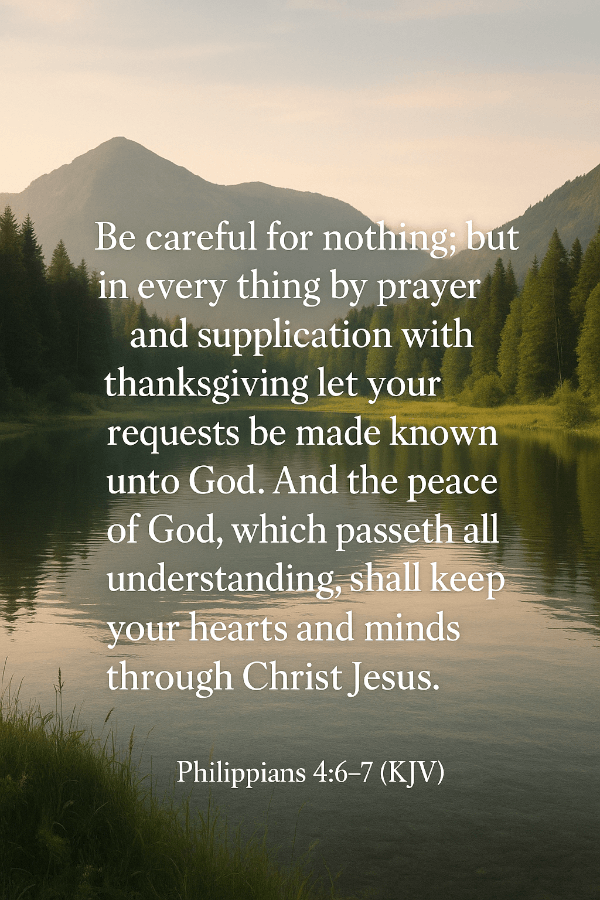
Philippians 4:6-7 (KJV)
“Be careful for nothing; but in every thing by prayer and supplication with thanksgiving let your requests be made known unto God. And the peace of God, which passeth all understanding, shall keep your hearts and minds through Christ Jesus.”
Reflection & short practice
Reflection: This verse invites replacing anxious "care" with prayer and thankful requests. The promise isn't instant removal of problems — it's a peace that guards heart and mind while you walk through difficulty.
Practice: Spend three minutes listing one worry, offer it to God in a short prayer, then name one thing you're thankful for. Breathe slowly.
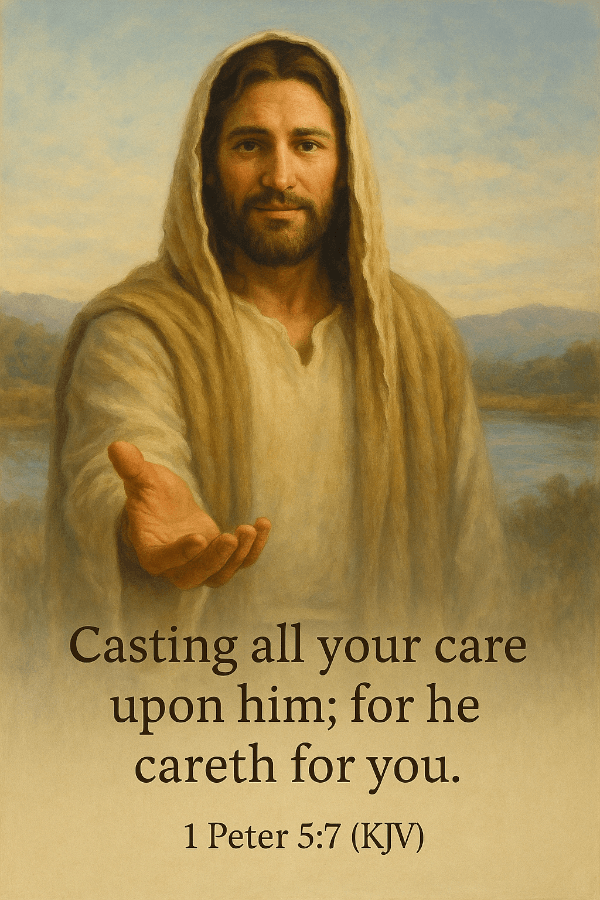
1 Peter 5:7 (KJV)
“Casting all your care upon him; for he careth for you.”
Reflection & short practice
Reflection: A short, tender verse — an invitation to hand over the heavy things. "Care" here means the load; handing it over is an act of trust.
Practice: Say the verse aloud slowly three times when a worry appears. Visualise setting the burden down.
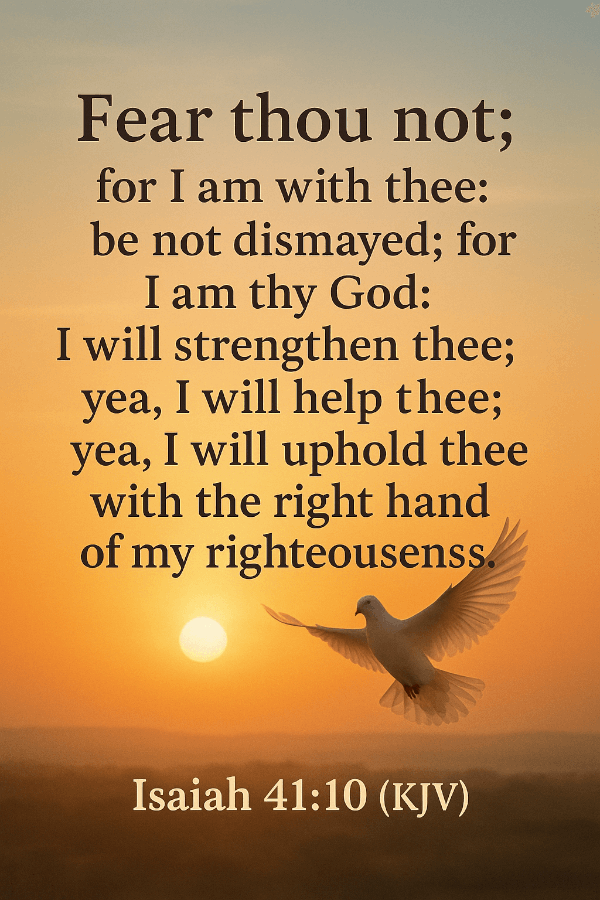
Isaiah 41:10 (KJV)
“Fear thou not; for I am with thee: be not dismayed; for I am thy God: I will strengthen thee; yea, I will help thee; yea, I will uphold thee with the right hand of my righteousness.”
Reflection & short practice
Reflection: A strong reassurance — God’s presence, help and strength. Use this when fear steals confidence.
Practice: Memorise a single line: "I will strengthen thee." Repeat it during moments of fear to steady your thoughts.
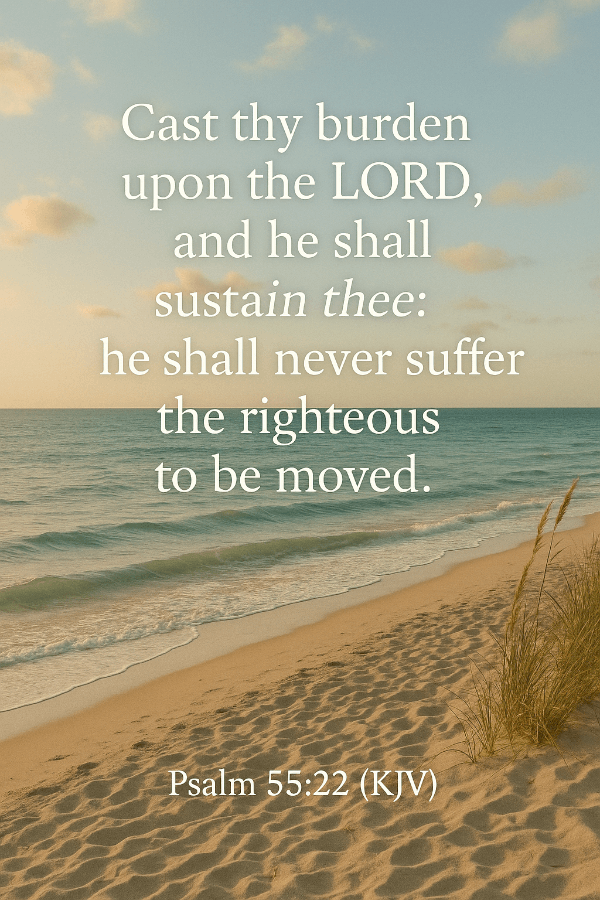
Psalm 55:22 (KJV)
“Cast thy burden upon the LORD, and he shall sustain thee: he shall never suffer the righteous to be moved.”
Reflection & short practice
Reflection: Similar to 1 Peter 5:7 — the psalmist speaks from the heart of struggle and points to the Lord's sustaining care.
Practice: Write down one burden. Tear the paper (symbolic), and pray the Psalm phrase as a release act.
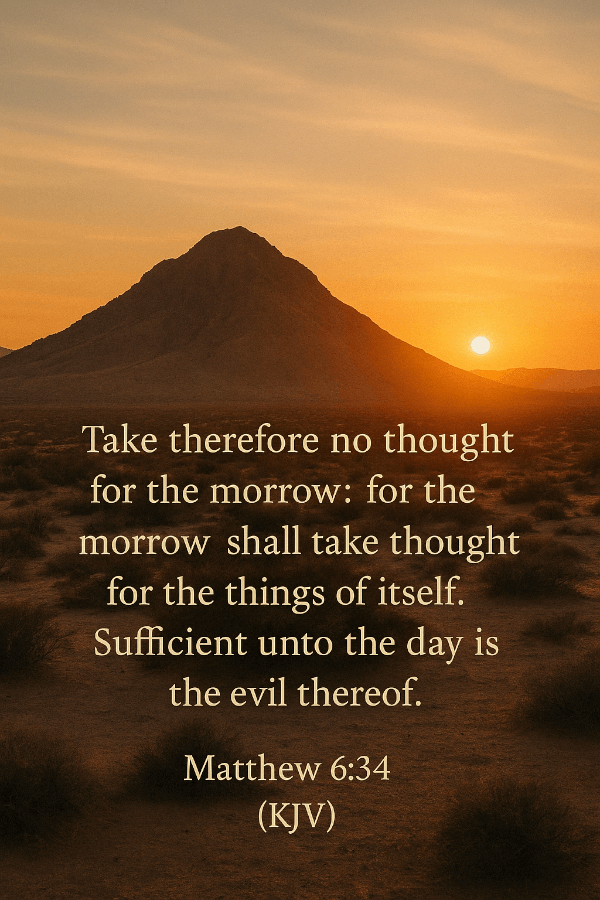
Matthew 6:34 (KJV)
“Take therefore no thought for the morrow: for the morrow shall take thought for the things of itself. Sufficient unto the day is the evil thereof.”
Reflection & short practice
Reflection: Jesus teaches focused living — handle today, not a catalogue of future worries. It's not avoidance but trust and prioritisation.
Practice: If your mind races about tomorrow, jot three immediate steps for today, then repeat the verse and do the first step.
Save & Share These Verses
Swipe to save or share a verse that speaks to you today.
"Be careful for nothing; but in every thing by prayer…"
Philippians 4:6–7
"Casting all your care upon him; for he careth for you."
1 Peter 5:7
"Fear thou not; for I am with thee…"
Isaiah 41:10
"Cast thy burden upon the LORD, and he shall sustain thee…"
Psalm 55:22
"Take therefore no thought for the morrow…"
Matthew 6:34
Swipe →
How to use these verses — practical, simple, daily
You don’t need a long devotional habit to benefit. Try one of these low-friction options designed for busy life.
1. Morning micro-ritual (1–3 minutes)
Read one verse slowly on waking. Whisper a short prayer: “Lord, I hand this worry to you.” Write one short gratitude sentence and go.
2. Walk-and-repeat (during commute / walk)
Use a simple phrase from the verse as a walking mantra — e.g., “Cast my care” or “Peace that passeth understanding.”
3. Journal prompt
After reading a verse: answer one question in a note: “What can I hand to God today?” Save it. Revisit weekly.
Small habits compound.
Why scripture can help anxious minds
Anxiety often comes from feeling out of control or overwhelmed by future possibilities. Scripture helps by: (1) Reframing problems in the presence of God; (2) Offering short, repeatable phrases that steady attention; (3) Giving practical next steps (prayer, gratitude, focus).
Combining scripture with simple habits
Anxiety often grows when our thoughts race ahead of the present, when the future feels overwhelming or out of control. Scripture acts like a steady anchor — a source of perspective, hope, and quiet clarity. Even a single verse can pause the spiral, redirect your mind, and bring a sense of peace rooted in God’s presence.
Simple ways to bring Scripture into anxious moments
Pause and reflect: read a verse slowly, let the words sink in, and breathe. One small moment can reset your mind.
Reframe your worries: consider your anxious thought through the lens of God’s promises or a comforting passage.
Write or speak it out: journaling one line of Scripture, or sharing it with someone, turns anxiety into action and focus.
Short, repeatable practices: memorize a line, repeat it in quiet moments, or recite it when stress rises — Scripture becomes a mental anchor.
If anxiety is severe or persistent consider speaking to a medical professional — faith practices can support, but they are not a substitute for medical care.
David’s Battle With Anxiety
Did you know even great biblical figures wrestled with anxious moments?
David, for example, poured out his heart in prayer when he felt overwhelmed:
"Cast thy burden upon the LORD, and he shall sustain thee: he shall never suffer the righteous to be moved." (Psalm 55:22, KJV)
You can take a moment like David did — a quiet pause in your day to reflect, pray, or read a verse that strengthens your heart.
Frequently asked (quick)
Can I use modern translations instead of KJV?
Yes — KJV is listed here for rhythm and tradition. Modern translations (NIV, ESV) can make meaning clearer for some readers.
Is this advice for clinical anxiety?
No. These practices are spiritual supports and self-care ideas. They’re not medical or therapeutic interventions.
How often should I repeat a verse?
Short daily repetition (1–3x) helps. The goal is consistency over intensity.